
Detect Wear Metals & Contaminants in Used Lubricating and Hydraulic Oils
Part 1: What Is RDE-AES? Principle, Standards, and Why It’s Ideal for Used Oil Analysis
Lubricating and hydraulic oils act as the protective medium of industrial mechanical systems, undertaking friction reduction, heat dissipation, anti-corrosion and equipment protection functions during long-term operation. As service time increases, oil fluids gradually accumulate wear debris, external pollutants and degraded additives, which are intuitive signals of equipment wear, system contamination and oil aging.
Traditional oil analysis methods face obvious pain points: complex sample preprocessing, long testing cycles and low batch detection efficiency, which cannot adapt to the fast-paced monitoring needs of modern industrial predictive maintenance. Among numerous analytical technologies, Rotating Disk Electrode Atomic Emission Spectroscopy (RDE-AES) stands out as a mature, efficient and cost-effective solution for waste lubricating oil and hydraulic oil detection.
What Is RDE-AES? Overview & Industry Standards
Rotating Disk Electrode Atomic Emission Spectroscopy (RDE-AES) is a specialized optical emission spectrometry technology tailored for liquid petroleum sample analysis. It strictly complies with the authoritative international standard ASTM D6595, the universal industry standard for quantitative analysis of metallic elements and contaminants in both in-service and waste lubricating oils, hydraulic oils and other industrial petroleum products.
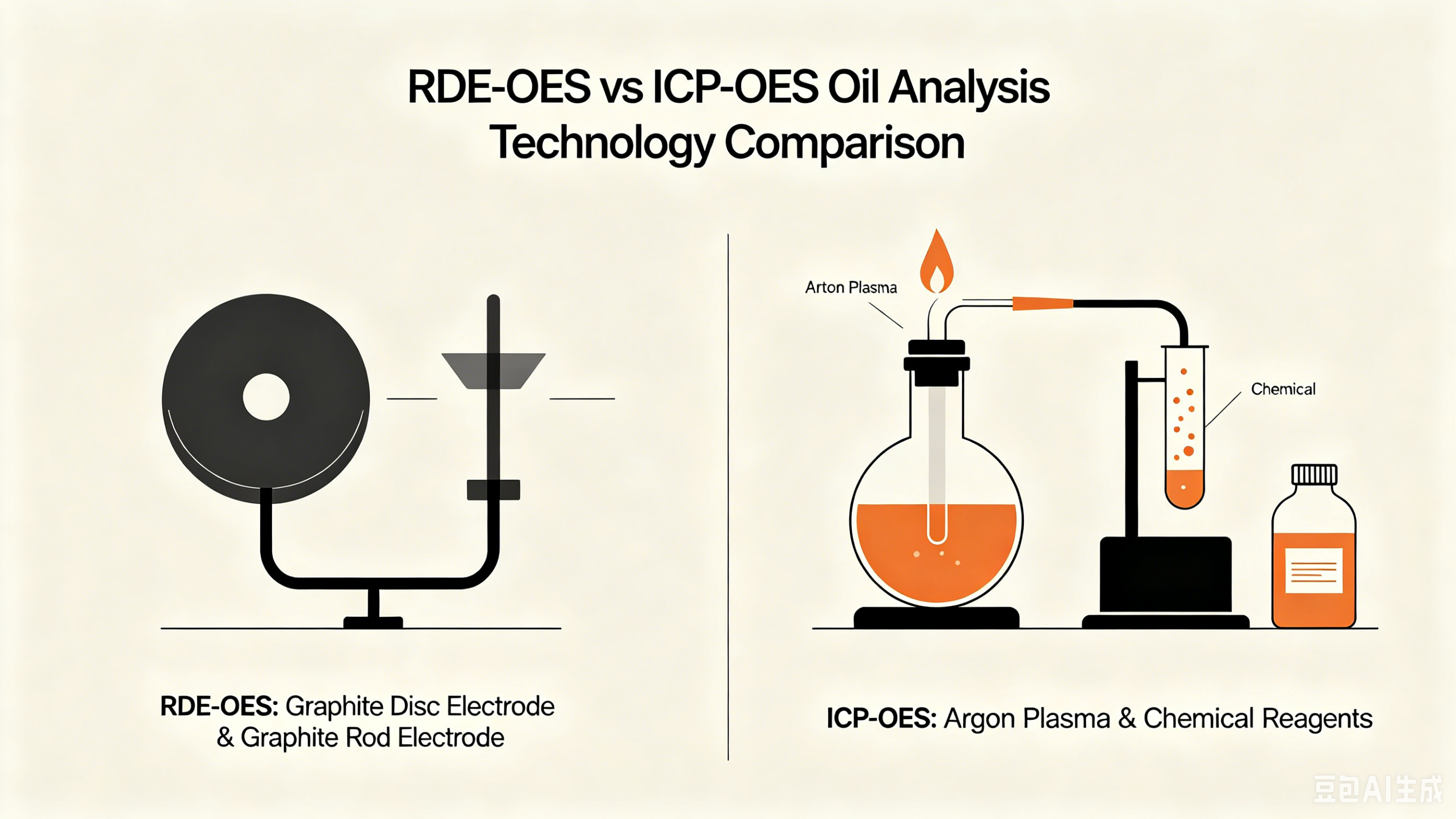
Compared with mainstream laboratory analysis technologies such as ICP spectroscopy, RDE-AES achieves revolutionary simplification in sample processing. ICP testing requires tedious acid digestion, heating dilution and impurity removal pretreatment, while RDE-AES supports direct testing of original oil samples without digestion, greatly shortening the detection cycle and avoiding element loss and secondary pollution caused by manual pretreatment. This unique advantage makes it perfectly suitable for on-site rapid screening and conventional laboratory batch detection of industrial oil products.
Core Working Principle of RDE-AES
The analytical logic of RDE-AES is based on electrode excitation, spectral separation and photoelectric signal conversion, with stable and repeatable detection results. The complete working process can be divided into three core steps:
1. Stable Sampling and Discharge Formation
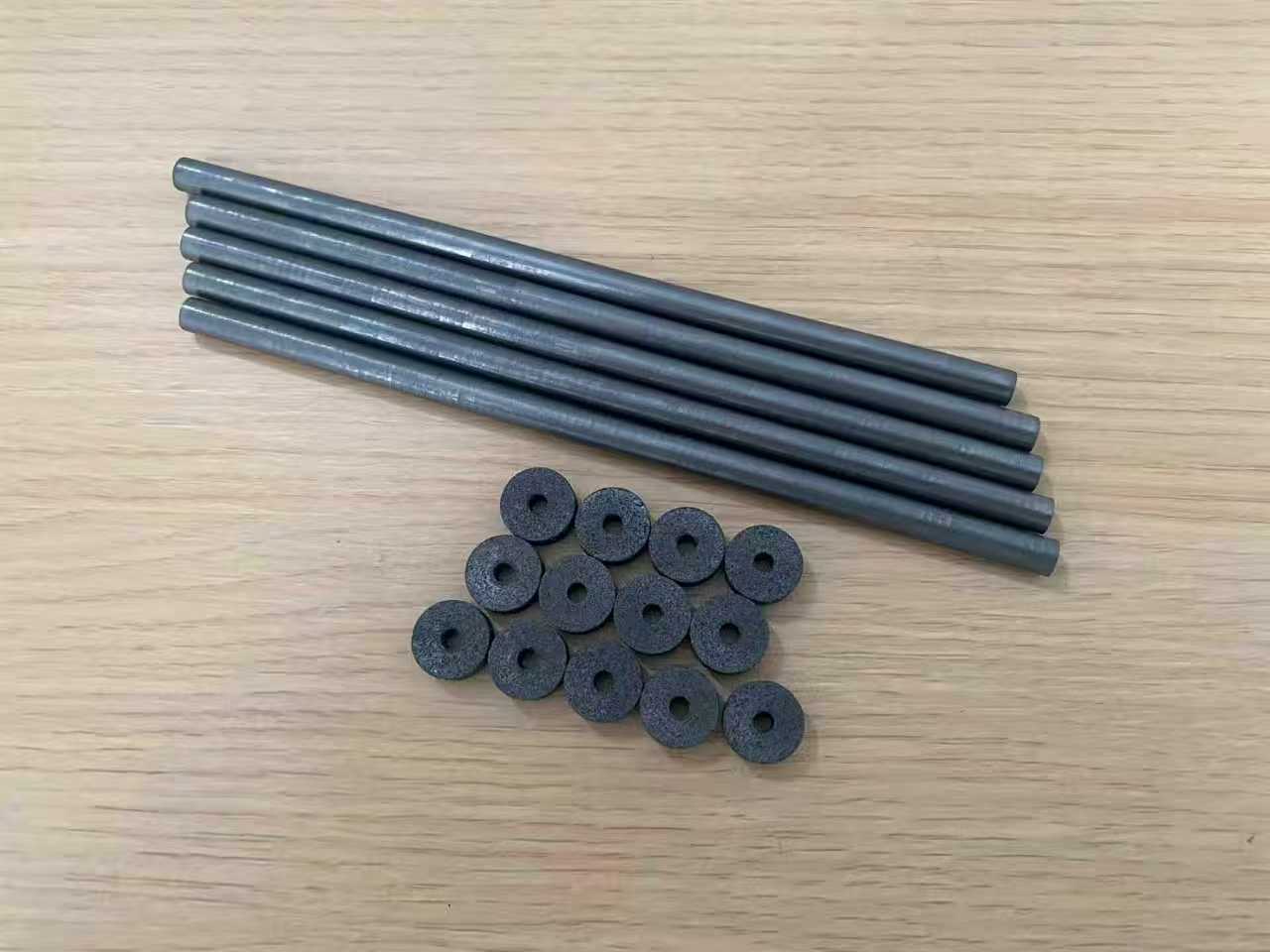
The system adopts a dual-electrode structure consisting of a rotating graphite disk electrode and a fixed graphite rod electrode, with a precise and stable discharge gap of 1–2 mm. During operation, the continuously rotating graphite disk uniformly extracts trace oil samples from the sample cup and stably transports them to the high-voltage discharge area, ensuring consistent sampling volume each time and laying a foundation for accurate detection.
2. High-Temperature Atomization and Spectral Excitation
A high-voltage arc is generated between the two electrodes, forming a high-temperature plasma environment of 5000–8000 Kelvin. The instantaneous high temperature rapidly vaporizes and atomizes all trace metal elements and impurity components in the oil sample. Each chemical element produces unique characteristic spectral lines at fixed wavelengths after being excited, which serves as the fundamental basis for qualitative and quantitative analysis.
3. Spectral Separation and Quantitative Calculation
The built-in Paschen-Runge concave grating optical system accurately disperses and isolates the characteristic spectral lines of different elements. High-sensitivity photoelectric detectors convert optical signals into measurable electrical signals. Combined with the standard calibration curve established by certified oil-based standard samples, the instrument automatically calculates the accurate concentration of each target element in the oil sample, with the unified unit of mg/kg.
Why RDE-AES Is the First Choice for Industrial Used Oil Monitoring
Different from general analytical instruments, RDE-AES is specially optimized for the physical and chemical characteristics of oil products. Its non-digestive direct testing mode, stable excitation performance and multi-element synchronous detection capability perfectly match the core demands of industrial equipment condition monitoring, helping enterprises realize real-time perception of oil status and early warning of mechanical faults.


Leave a Reply